Caritas Bliss Eco Farm, Inc. — Est. 2019

Cultivating life, from soil to soul.

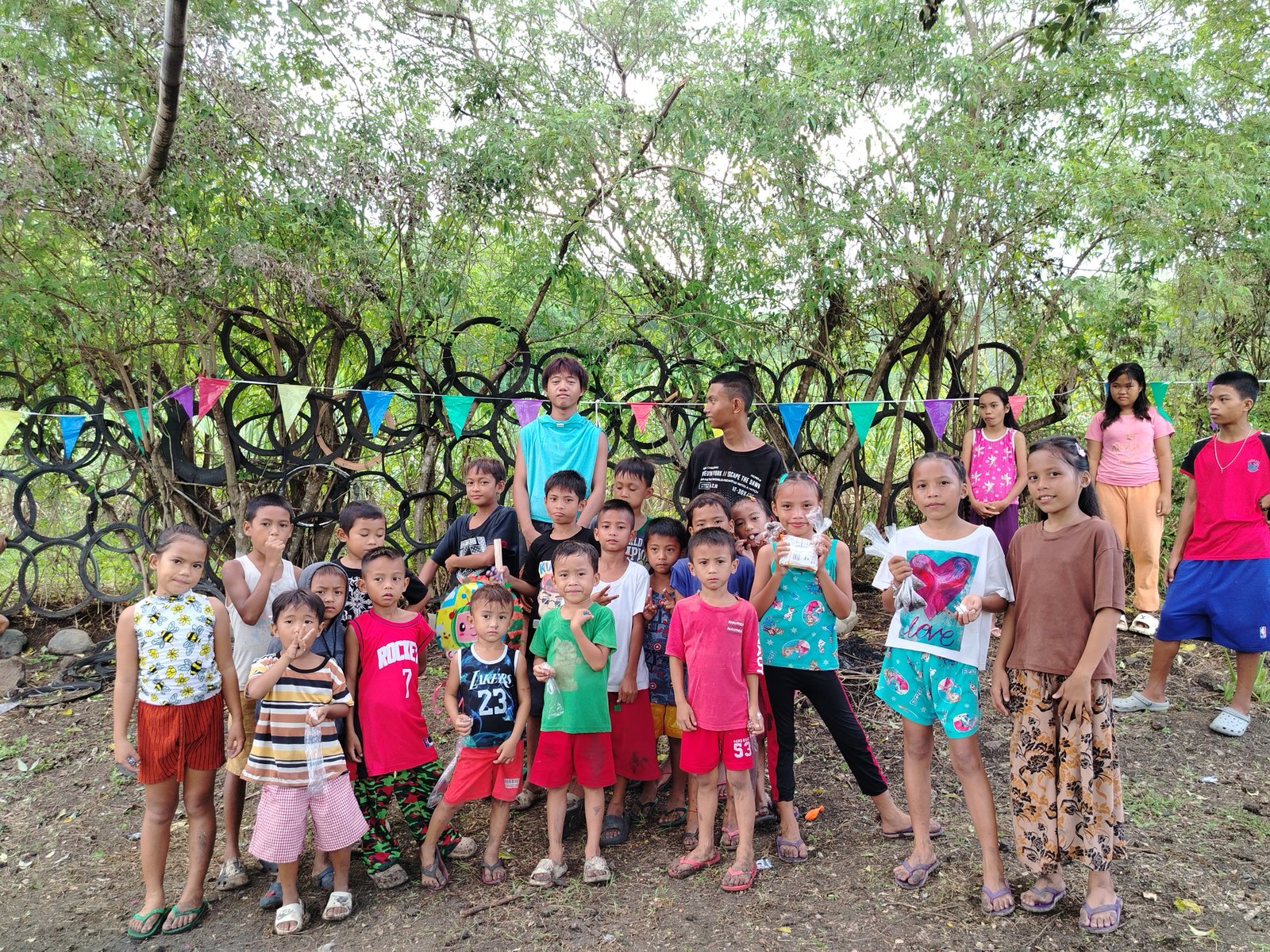
A regenerative eco-farm and social enterprise in San Carlos City Negros Island Region, Philippines. We grow food with reverence, feed the children of our barangay, and form the next generation in the virtues of patience, gratitude, and stewardship.
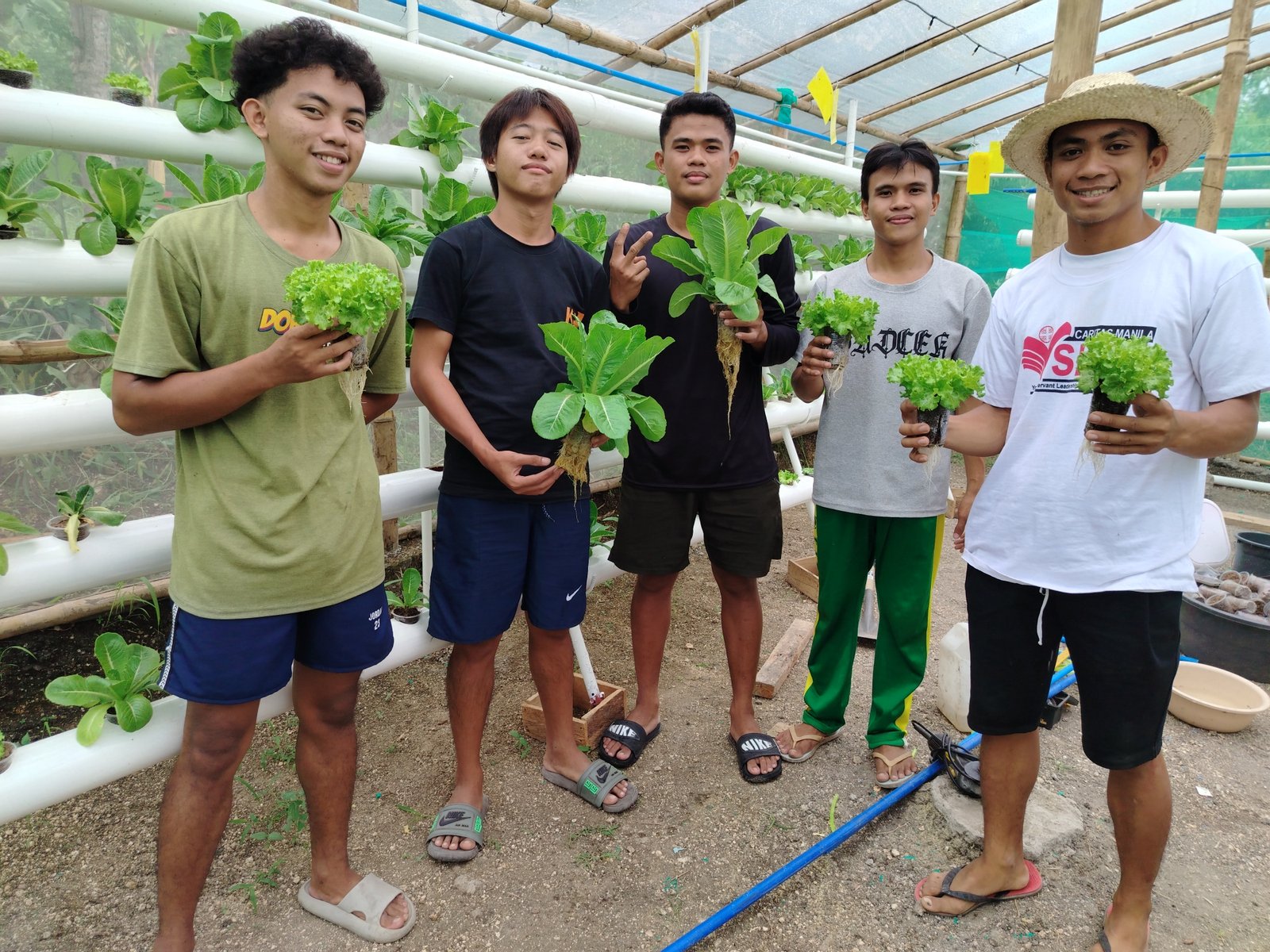
Freshly harvested vegetables from the farm
Our Purpose

A farm rooted in faith, growing for the least of these.

We exist at the meeting point of agriculture and charity — a working farm whose first customer is always the hungry child nearby.

Mission

To cultivate the land with reverence.

To cultivate the land with reverence, produce nourishing food through regenerative practice, and share the harvest with the children and families who need it most — recognizing that the same patience required to grow a tomato is the patience required to grow a person.

We exist at the meeting point of agriculture and charity: a working farm whose first customer is always the hungry child in the nearby barangay, and whose every harvest is measured not only in kilos but in meals served, lessons taught, and lives slowly mended.

Vision

A future where every child eats from a farm they know by name.

A future where every child in our community eats from a farm they know by name, where soil is renewed rather than depleted, where agriculture is once again an act of care — for land, for people, and for the God who made both.

We envision a network of small Filipino farms practicing regenerative agriculture, feeding their immediate neighbors first, and forming the next generation in the virtues of patience, gratitude, and stewardship.
"The earth is the Lord's, and everything in it. We are only gardeners — and gardeners, in the end, give away what they grow."
Core Values

Six commitments that order every decision.

The virtues we practice in the field are the virtues we teach in the pavilion.

01

Reverence for Creation

We farm as stewards, not owners. Every furrow is a prayer; every seed, an act of trust. The land is a gift to be tended, not a resource to be extracted.

02

Regenerative Practice

Leave the soil better than you found it. Always. We compost, cover-crop, rotate, and rest the land — measuring success by rising fertility, not yield alone.

03

Community First

The harvest belongs to the hungry child before the paying customer. Our farm exists to serve the barangay it sits within — non-negotiable, even when the books are tight.

04

Dignity of Labor

Hands in the soil are hands at holy work. We pay our farmers fairly, rest on the Lord's Day, and refuse to romanticize exhaustion as virtue.

05

Simplicity

Enough is a feast. More than enough is a burden. We resist scale for scale's sake and trust that small work done well is greater than large work done carelessly.

06

Joyful Service

We do not give from surplus. We give from the heart — with laughter, with music in the field, and with children underfoot. Joy is the surest sign the work is true.

Farming Activities

From seed to shelf — the full rhythm of the farm.

Three phases of work, each treated with the same care and patience.

01
Phase One

Pre-Harvest

The slow work before the harvest: preparing the land, selecting seeds, building the soil. Regenerative agriculture begins here — in the dirt, weeks before a single vegetable is picked.

01
Soil
Land Preparation

Beds are formed, loosened, and amended with compost to welcome the seed.

02
Seed
Seed Selection

Heirloom and native varieties chosen for flavor, resilience, and locality.

03
Feed
Composting

Kitchen scraps, manure, and leaves slowly turned into black gold.

04
Cover
Cover Cropping

Legumes and grasses sown to fix nitrogen and protect resting soil.

05
Water
Irrigation Setup

Drip lines and mulch laid to conserve every drop through dry spells.

02
Phase Two

Post-Harvest

The careful work after the harvest: hand-picking at peak ripeness, washing, sorting, and preserving. We treat each vegetable as the gift it is — minimizing waste, maximizing nutrition.

01
Pick
Hand-Harvesting

Each fruit picked at peak ripeness by hand, in the cool of the morning.

02
Wash
Washing & Cleaning

Clean spring water and gentle hands remove soil without bruising the skin.

03
Sort
Sorting & Grading

Produce graded by size and quality — first fruits to the children's table.

04
Pack
Packing

Baskets lined with banana leaves, crated for the short trip to the pavilion.

05
Store
Cold Storage

Surplus held in a cool cellar to extend freshness without refrigeration.

03
Phase Three

Value-Added Products

The craft that transforms surplus into provision: herbal teas, fermented goods, fruit preserves, natural fertilizers, handmade soap. Every product extends the life of the harvest and supports the mission.

01
Brew
Herbal Teas

Lemongrass, tulsi, and malunggay dried in bundles and steeped for wellness.

02
Ferment
Fermented Goods

Sauerkraut, vinegar, and kimchi — living foods that preserve and nourish.

03
Preserve
Fruit Preserves

Jams and jellies from mango, calamansi, and guava — summer in a jar.

04
Nourish
Natural Fertilizers

Compost tea and bokashi brewed to feed the soil that feeds us.

05
Craft
Handmade Soap

Goat's milk, herbal infusions, and coconut oil — gentle on skin and stream.

Community Programs

Where the harvest becomes hope.

Three programs that turn vegetables into meals, dreams into roots, and afternoons into formation.

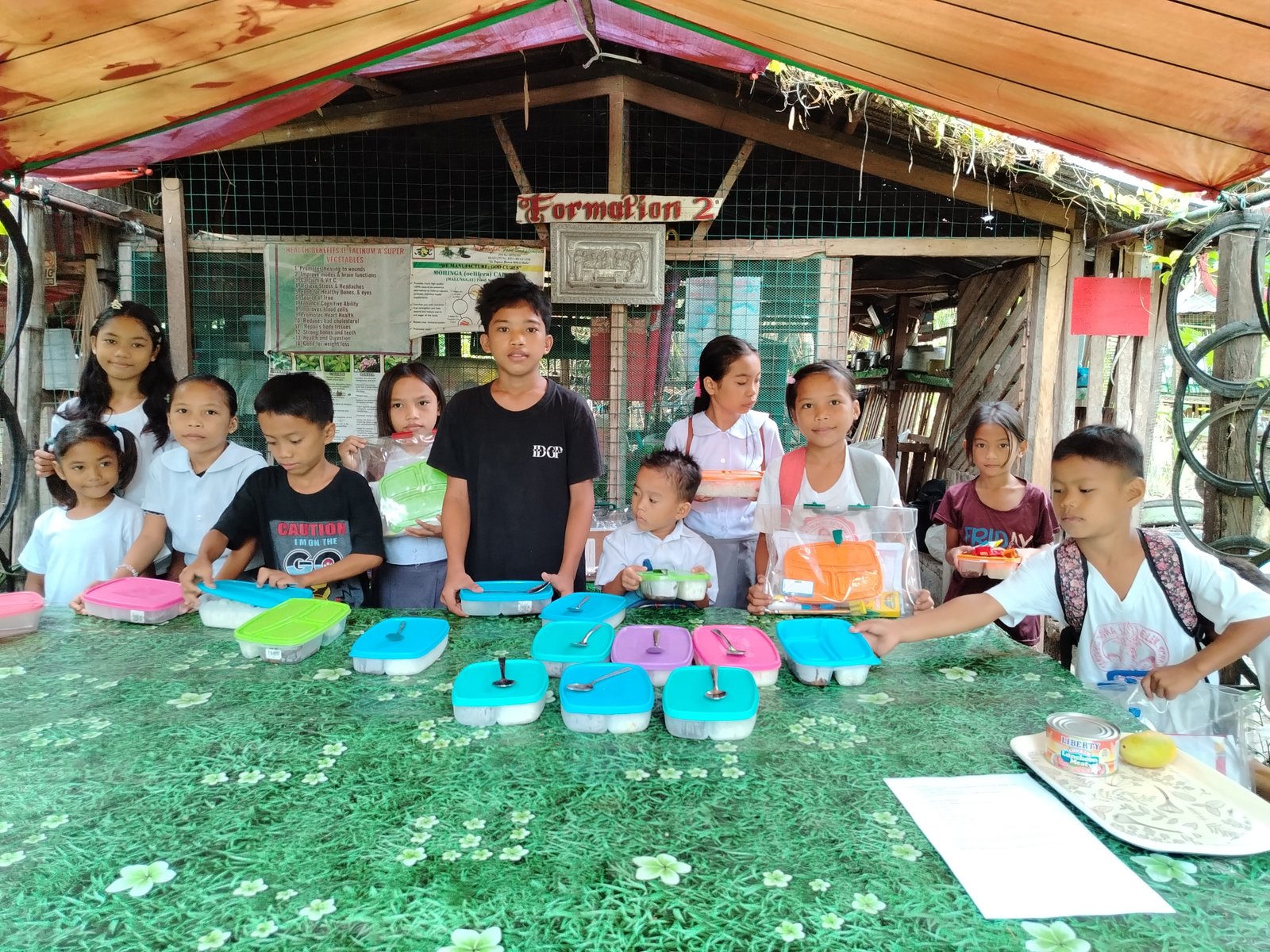
Children sharing a meal at the farm pavilion
Program 01

Saturday Feeding Program

Every Saturday morning, 80 to 120 children from the nearby barangay gather at the farm pavilion for a nutritious meal prepared from that morning's harvest. Rice, vegetables, legumes, and fruit — all grown steps away, all served within hours of being picked.

The meal is more than calories. It is a moment of dignity, of conversation, of belonging. Children sit at long wooden tables under the acacia trees, say grace together, and eat slowly.

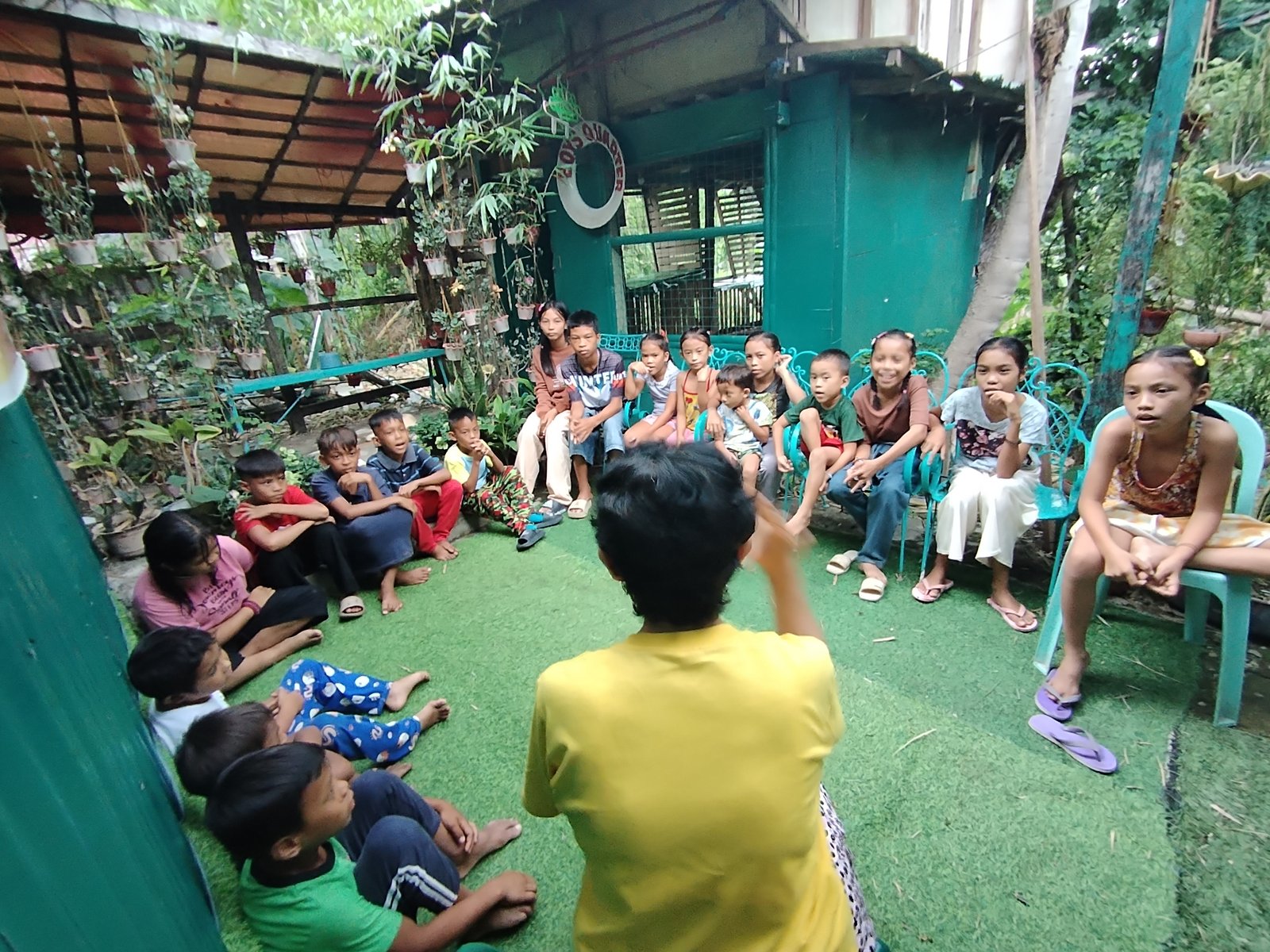
Children learning and praying together
Program 02

Values Formation for Children

Twice a month, the children of the feeding program gather for values formation — a slow afternoon of storytelling, prayer, gardening, and reflection. We teach the virtues the soil already teaches: patience, gratitude, stewardship, hope.

Each session pairs a Scripture story with a hands-on farm activity. The Parable of the Sower becomes a lesson in seed-saving. The story of the loaves and fishes becomes a lesson in composting and abundance.

A child planting a seedling with a wooden dream tag
Program 03

Plant a Dream

An initiative where every sponsored seed becomes a child's prayer in the soil. Sponsors choose a seed — a tomato, a malunggay, a sunflower, a papaya — and dedicate it to a dream: a child's wish, a loved one's memory, a hope for the community.

Children from the barangay plant each seed by hand, write the dream on a small wooden tag, and tend it through the season. As the plant grows, so does the dream — and at harvest, the child receives a photo, a letter, and a share of what that seed became.

One seed. One dream. One child. A whole season of patience, watered by hope.

Plant Your Dream →